





Introduction: why a one-day photo itinerary in the Cinque Terre
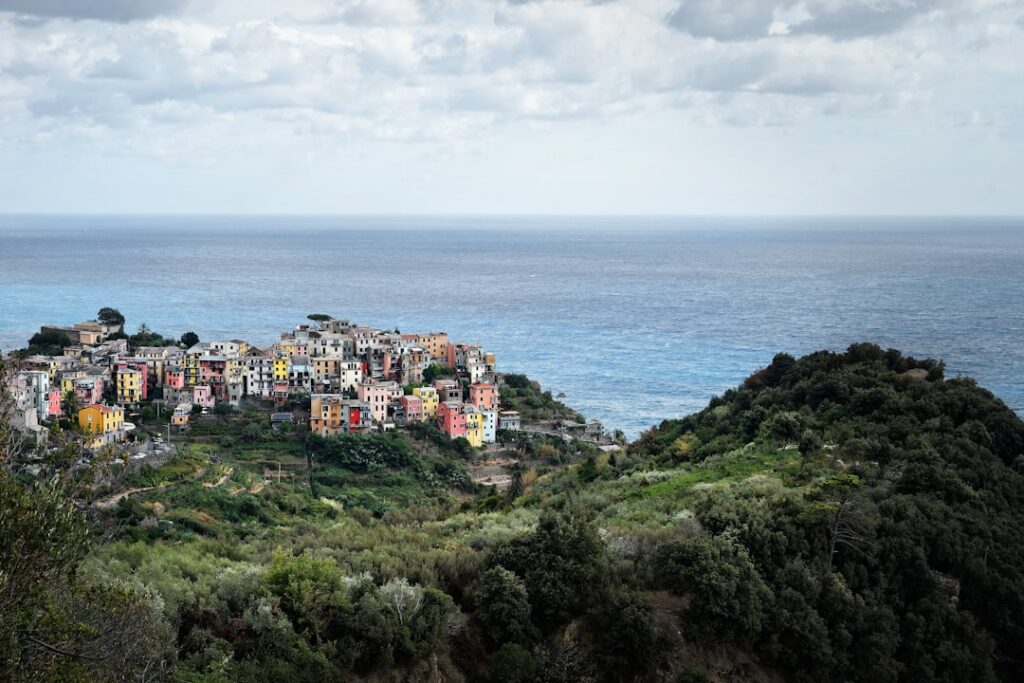
The Cinque Terre — Monterosso al Mare, Vernazza, Corniglia, Manarola and Riomaggiore — rank among Italy’s most iconic coastal landscapes. This string of villages clinging to the cliffs of the Ligurian Riviera draws hobbyists and pro photographers alike thanks to its colorful façades, olive terraces, scenic footpaths and an intact Mediterranean atmosphere. Planning a one-day photo itinerary through the Cinque Terre requires a mix of logistical prep, visual choices and a healthy dose of flexibility to work with the light and transport schedules. The aim of this article is to give you a complete route with exact addresses, indicative prices in euros, useful opening times, immersive descriptions and practical local tips to help you get the best shots in a single day.
One day isn’t long, but it’s enough to capture the essence of all five villages if you optimize travel and shooting windows. The strongest photos usually come at dawn and late afternoon, when the sea turns golden and the alleys haven’t yet been overrun by cruise-day crowds. The Sentiero Azzurro (part of Sentiero 2), the small harbors, stone stairways, baroque churches and viewpoints offer a broad range of compositions: wide panoramas, environmental portraits, architectural details and scenes of daily life. In this guide I propose a realistic route starting from the north (Monterosso al Mare) and heading south to Riomaggiore — a practical option if you arrive by train from La Spezia or Genoa.
Before you pick up your camera, it’s essential to know the practical and administrative details: the Cinque Terre Card (« Treno » or « Trekking » options) grants access to regional trains between the villages and to some paid trails; train frequency is high but varies off-season; some viewpoints require park entry or an activated pass; and always follow trail signage — temporary closures for maintenance or landslide risk are common. Below I’ll go through each village with exact addresses, recommended shooting spots, opening times and prices (when available), plus hands-on tips for gear, handling light and staying safe.

Monterosso al Mare — first hours, beach and old town
Monterosso al Mare is the largest village in the Cinque Terre and often the practical starting point for a circuit. Its station, Stazione di Monterosso, gives direct access to the quays and beaches. Useful address: Stazione di Monterosso, Via Giuseppe Garibaldi, 14, 19016 Monterosso al Mare SP, Italy. Arrive at dawn and head to Fegina Beach (Spiaggia di Fegina) to capture the first light on the sea and fishermen’s silhouettes. Beach address: Spiaggia di Fegina, Viale Fegina, 19016 Monterosso al Mare SP, Italy. The promenade and the Nerina statue create leading lines that work well for minimalist compositions.

 Click here to book a kayak and snorkeling excursion
Then make your way up to the old town (Monterosso Vecchia) via the main street. Don’t miss the Chiesa di San Giovanni Battista (address: Largo Guglielmo Marconi, 8, 19016 Monterosso al Mare SP, Italy), a Gothic church with marble details. Typical opening hours: 09:00–12:00 and 16:00–19:00 (may vary with season and mass times). Entrance is usually free, though donations are appreciated. The narrow alleys around Piazza Garibaldi and the old houses give intimate framing opportunities: wall textures, flowered balconies and stone steps.
For an elevated viewpoint, climb up to the statue of San Cristoforo and the belvedere on via degli Ulivi: the panoramic view over roofs and sea is spectacular in the early morning. If you want a wider shot, the path to the headland (Capo di Monterosso) gives an unobstructed view of the main cove. Practical tip: allow 45–60 minutes for these morning explorations so you still have time to catch the train to Vernazza.
Practical info and prices in Monterosso:
- Cinque Terre Card – Treno (one day): around €16.00 (indicative; check at the ticket office or the official site)
- Cinque Terre Card – Trekking: roughly €7.50 for trail access if bought separately
- Suggested times: arrive at sunrise to avoid crowds; beaches are freely accessible
- Photo tips: wide-angle lens (16–35mm), polarizing filter to reduce sea glare, lightweight tripod if you plan long exposures from the pier
Vernazza — the postcard harbor and castle scene
Vernazza is often considered the classic « postcard » of the Cinque Terre: its horseshoe-shaped harbor, colorful bell tower and fishing boats make for rich compositions. Best arrival point is Stazione di Vernazza, address: Via Roma, 1, 19018 Vernazza SP, Italy. As soon as you exit the station you’re on the main street that leads down to the harbor. For photos, set yourself up on the jetty or on the paved area near the harbor: the ochre and pink houses clinging to the cliff create strong lines and contrasts.
Don’t miss the Chiesa di Santa Margherita d’Antiochia (address: Piazza Marconi, 7, 19018 Vernazza SP, Italy), right on the water’s edge. Typical opening hours: 09:00–12:30 and 15:30–18:30; usually free entry with donations welcome. Nearby, the Doria Tower (Castello Doria) on the hill offers an exceptional viewpoint over the village and sea. Getting to the castle involves steps and a short trail; wear comfortable shoes. Access is often free, but there may be a small admission fee of about €2–4 if temporary exhibitions are on.
The best light in Vernazza is late afternoon, when side lighting emphasizes façades and water reflections soften. For detailed shots, focus on fishing nets, rusted anchors, colorful ribbons and shuttered windows — these elements tell the fishermen’s daily story. If you prefer people-focused scenes, stake out the cafés on the small square: conversations, espresso service and fish deliveries at the morning market make lively subjects.
Practical info and prices in Vernazza:
- Harbor access: free
- Castello Doria access: sometimes free or €2–4 for certain exhibit areas
- Suggested times: late afternoon for light; morning for market scenes
- Photo tips: 70–200mm telephoto to isolate façade details, fast shutter to freeze people in motion, moderate ISO to keep images sharp
Click here to book a sunset cruise

Corniglia — the perched village and terrace panoramas
Corniglia is different from the other villages: it sits higher up and has no harbor. You’ll arrive at Stazione di Corniglia (address: Via Fieschi, 19016 Corniglia SP, Italy), but note the station is below the village. To reach the center you can climb the famous Lardarina (a flight of 382 steps) or take a shuttle (paid) from the station up to the village. Useful address for the central square: Piazza San Giorgio, 19016 Corniglia SP, Italy. Corniglia’s real treasure is the panorama over olive terraces and vineyards cascading down the slopes.
Click here to book a Corniglia–Manarola hike with tasting

The most photogenic viewpoint is the Santa Maria overlook, close to the Chiesa di San Pietro (address: Piazza San Pietro, 19016 Corniglia SP, Italy). Opening times: usually 08:30–18:30 for public areas. Stone walls, narrow lanes and small artisan shops offer classic frames for street portraits. The contrast between the village’s height and the sea below creates a strong sense of depth, especially on clear days.
Corniglia is also the perfect place to capture the relationship between agriculture and the sea: vineyard stairways, dry-stone terraces and retaining walls form repeating patterns that are great for photography. A versatile 24–70mm lens covers both wide scenes and architectural details. If you plan to fly a drone, strictly check local rules and potential park bans — drone use is often restricted in the national park.
Practical info and prices in Corniglia:
- Station-to-village shuttle (alternative to Lardarina): around €1.50–2.00 per trip (varies by season)
- Belvedere access: free
- Suggested times: morning for frontal light on the sea; late afternoon for long shadows on the terraces
- Photo tips: comfy shoes for climbs, spare battery for long walks, macro lens for plant and stone texture details
Manarola and the famous Via dell’Amore — sunset and fishermen
Manarola is one of the most photogenic villages, with houses that look like they’re clinging to the cliff and a small cove below. Arrive at Stazione di Manarola, address: Via Pianazzi, 19017 Manarola SP, Italy. The classic spot is the rocky point at the village’s end, reached by stairs down to the sea: perfect for silhouettes at sunset and for capturing waves crashing on the rocks. The famous path between Manarola and Riomaggiore, the Via dell’Amore, was historically a romantic coastal walk; unfortunately it can be partially closed for safety reasons — check its status before you go. Useful info point: Parco Nazionale Cinque Terre – Info Point, Via Discovolo, 1, 19017 Manarola SP, Italy.
Another evocative spot is the small jetty where fishermen mend their nets — ideal elements for storytelling images. For less common perspectives, look for the stairways that lead up to the upper belvedere (Via Renato Birolli): from above you can compose shots that show the line of houses, the cove and boats below. At dusk, try long exposures (ND filter recommended) to smooth the water and create a dreamier mood.
Times and practical info in Manarola:
- Cove access: free
- Via dell’Amore: condition varies; if open it may require a park pass (included in the Cinque Terre Card Trekking)
- Suggested times: sunset for house silhouettes; early morning for tranquility
- Photo tips: remote shutter for long exposures at sunset, protect yourself against sea spray, shield your lens from splashes
Click here to book a photo session with a local photographer

Riomaggiore — end of the route, the marina and the colorful street
Riomaggiore is often the final stop when descending through the Cinque Terre. Its station, Stazione di Riomaggiore, sits at the village entrance: Via Colombo, 19017 Riomaggiore SP, Italy. The marina and small jetty are prime spots for dynamic compositions: boats, ropes, colorful steps and lined-up houses form a visual patchwork. A classic is the main street, Via Colombo, which winds up and down between vivid façades — perfect for street photos with strong perspective.
Click here to book a full-day snorkeling boat tour

The small elevated park (Belvedere) offers one last sweeping view back up the coast — ideal for a final panorama from your day. The Castello di Riomaggiore (old hill fort) also provides interesting vantage points, sometimes accessible depending on local routes. For food, stop at Ristorante Dau Cila (address: Via Colombo, 81, 19017 Riomaggiore SP, Italy) to try spaghetti alle vongole (around €12–18) or local focaccia; typical restaurant hours are 12:00–15:00 for lunch and 19:00–23:00 for dinner.
If time allows, end the day with a boat crossing from the harbor (seasonal service) to get an alternative sea-level view of the five villages in a row. Private or shared boat trips vary in price: roughly €20–40 per person for a short panoramic cruise (indicative; depends on operator).
Practical info and prices in Riomaggiore:
- Average restaurant: main course €10–20
- Panoramic boat excursion: €20–40 per person (check season and operator)
- Suggested times: late afternoon and early evening for soft light and atmosphere
- Photo tips: capture reflections on the wet marina surfaces, use a 35–50mm focal length for environmental portraits on the main street
Logistics and practical tips to make your photo day a success
To get the most out of a day in the Cinque Terre, here’s a consolidated list of practical recommendations and gear suggestions:
- Cinque Terre Card: the one-day « Treno » pass costs about €16.00 (indicative) and allows unlimited train travel between the Cinque Terre stations. The « Trekking » pass (around €7.50) is required for access to some segments of the Sentiero Azzurro. Buy at the station ticket office or online if possible.
- Train schedules: regional trains run frequently (every 15–30 minutes in high season); check timetables on the Ferrovie dello Stato site or at station boards. Frequencies drop in low season.
- Best light windows: sunrise in Monterosso for calm seas; late afternoon in Vernazza and Manarola for golden façades; sunset from Manarola for silhouettes.
- Recommended gear: a versatile camera body, wide-angle (16–35mm), standard zoom (24–70mm), telephoto (70–200mm) if possible, light tripod, ND and polarizing filters, spare batteries and memory cards.
- Weather and clothing: expect sea breeze, spray and temperature shifts; bring a windbreaker, non-slip shoes (alleys and steps can be slippery), and a waterproof cover for your camera bag.
- Safety and respect: don’t climb barriers, respect trail closures, avoid blocking paths while shooting, and ask permission before taking close portraits of locals.
- Food and hydration: pack snacks and water; restaurants are plentiful but queues can be long in peak season. Meal budget: €8–25 per person depending on the venue.
Suggested timed itinerary for a full day (example)
Here’s a tightly structured example itinerary for a productive photo day, starting early in Monterosso and finishing in Riomaggiore:
- 05:45–07:15: Arrive in Monterosso for a beach and old-town session (Fegina and Chiesa di San Giovanni Battista). Capture the sunrise.

- 07:30–09:00: Train to Vernazza (~10-minute ride). Explore the harbor and climb to Castello Doria for morning panoramas.

- 09:15–11:00: Train to Corniglia (take the shuttle if needed). Wander the lanes and shoot from the Chiesa di San Pietro belvedere.
- 11:30–13:30: Train to Manarola. Light lunch, explore the viewpoints and experiment with long exposures on the rocky point.
- 14:00–16:30: Arrive in Riomaggiore; head up to the belvedere, shoot street scenes and the marina. Coffee break and visit the local market if it’s open.

- 17:00–19:00: Return by boat (if available) or train for a final sunset shoot from Manarola or Vernazza depending on weather.

This schedule assumes a brisk but realistic pace; adapt it to your priorities (spend more time in one village or on a specific trail). Keep in mind that weather and trail conditions can significantly alter the plan.
Conclusion: make the most of a day and ideas for coming back
A one-day photo run through the Cinque Terre is an intense experience: you’ll cross five villages, maritime zones and agricultural panoramas in a matter of hours. To succeed, combine preparation (maps, passes, gear), chosen priority angles and flexibility to react to changing light and trail closures. Key points to get stronger images are: arrive early, use golden hour light, vary focal lengths and perspectives, and respect local life. Also plan for backups — a portable hard drive or cloud storage at the end of the day is smart, since you’ll likely shoot a large number of images.
If you like the one-day format, consider coming back to dig deeper: spend a full day hiking closed sections of the Sentiero Azzurro or wilder stretches, try an early-morning boat trip for unique marine views, or stay overnight in one village to photograph the day-to-night transition and nocturnal lights. For park protection, remember to buy the Cinque Terre Card again if your visits span multiple days — it helps fund trail maintenance and safety.
Click here to take a morning boat cruise with brunch
Finally, don’t forget that the beauty of the Cinque Terre is as much about the people as it is about the scenery: markets, fishermen, artisans and cafés are photographic subjects that bring your images to life and make them unique. Bring curiosity, time and respect — and your results will be more than just pretty pictures: they’ll be the memory of a day spent at the heart of an exceptional coastline.

