




Introduction: An immersive dive into the five villages
The Cinque Terre — Monterosso al Mare, Vernazza, Corniglia, Manarola and Riomaggiore — make up one of Italy’s most iconic coastal landscapes: cliffside villages, colorful facades, terraces of olive trees and vineyards shaped over centuries, and trails that overlook an intensely blue Mediterranean. But behind the postcard scenes lie tiny local worlds with their own histories, landmarks, rhythms and specific spots that give a visit its flavor. This local guide “Every Village Explained” aims to walk you down every alley, to the foot of every church, up every viewpoint and to the best local tables — with practical notes, prices, opening times and on-the-ground tips so you can experience the Cinque Terre like a well-informed local.
We’ll start with Monterosso al Mare, the largest and most beach-oriented, where beaches and baroque churches coexist; then we’ll go to Vernazza, the village with a picturesque harbor and medieval tower; next Corniglia, perched and quieter with its long stairway and panoramic outlook; Manarola, famed for terraced vineyards and the classic sunset photo; and finally Riomaggiore, the southern gateway to the Cinque Terre where the fishing vibe is strongest and the Sentiero Azzurro begins. For each stop you’ll find: full place and monument names, exact addresses (stations, churches, info points), prices in euros for essentials (transport, museums, services), opening hours, immersive descriptions and local tips — for example when to avoid the crowds, how to get the best sunrise and sunset views, and where to sit for an espresso or a local glass of wine.
This guide is practical but also sensory: imagine the smell of freshly made pesto, the crunch of pebble trails underfoot, the bobbing of boats in the harbors and the coolness of a sciacchetrà on a terrace. You’ll also find useful details about the trail network (Sentiero Azzurro and alternate routes), how the Cinque Terre Card works, logistics (stations and parking) and tips for photographing each village at its best. Whether you’re hiking, shooting photos, traveling by train or driving, this guide will let you approach each village with context and a short local roadmap to get the most out of your days.
One important note before we begin: opening hours and prices can change with the tourist season. The information in this guide is indicative and reflects common practices; it’s wise to check official updates online (municipal websites, tourist offices or the Parco Nazionale delle Cinque Terre) before you leave. Now, let’s head to the first village: Monterosso al Mare.

Monterosso al Mare: seaside charm and religious heritage
Monterosso al Mare is the largest of the five villages and the only one with a true sandy seafront — Spiaggia di Fegina. Here you’ll find developed beaches, a medieval old town with narrow lanes (il borgo storico) and hills planted with citrus and vines. Monterosso is split into two distinct parts: modern Fegina (the beach side) and the medieval old town, separated by the headland. That contrast gives you both beach relaxation and a heritage stroll.
Religious architecture is well worth a visit: the standout church is the Chiesa di San Giovanni Battista (the parish church), located at Piazza San Giovanni, 19016 Monterosso al Mare SP, Italy. Dating from the 13th century and later remodeled, it boasts a striking Ligurian-Gothic facade and an interior with carved capitals. Opening hours: usually 09:00–12:00 and 15:00–18:00 (may vary with season and services). Entry: normally free, donations welcome.

For military history fans, the Torre Aurora on Fegina beach is an old defensive tower near Piazza Giuseppe Garibaldi. The Monterosso Train Station is at Piazza Don Minzoni, 1, 19016 Monterosso al Mare SP, Italy — essential for planning your train transfers through the Cinque Terre. Regional train schedules (Trenitalia) run along the La Spezia–Genoa line; a standard ticket between Monterosso and La Spezia costs around €2.40–€4.00 depending on distance and fare zones.
Food is another highlight: to try traditional pesto (basil, pine nuts and pecorino sauce), head to Ristorante Belvedere (Via Roma, 29, 19016 Monterosso). Price guide: starters around €8–€12, pasta dishes €10–€16, grilled fish €18–€28. Typical hours: 12:00–15:00 and 19:00–23:00; often closed in the afternoon between services. Local tip: book a terrace table for the bay view, especially in high season.
Practicalities: if you arrive by car note the Parcheggio Comunale Monterosso (Via Fegina, 19016 Monterosso al Mare): paid parking and limited-traffic zones (ZTL) apply in the old town. In high season, prefer the train from La Spezia (Stazione di La Spezia Centrale, Piazza Medaglie d’Oro, 19121 La Spezia SP) to avoid parking headaches. Finally, the Sentiero Azzurro connects Monterosso to Vernazza (Trail 2, about 3.5 km, moderate difficulty); a Cinque Terre Card is required for some paid sections (see the pass info below).
 Click here to book a guided kayak trip Monterosso to Vernazza
Local tips for Monterosso
- Arrive early in the morning to enjoy the beach and alleyways before the day-trippers arrive; sunrise along the coast is spectacular.
- Lunch: order local fish specialties (anchovies, swordfish) and finish with a glass of Sciacchetrà, the local dessert wine.
- Shoes: wear closed shoes for trails toward Vernazza — terrain can be rocky and slippery after rain.
- Showers and changing rooms: several private beaches offer paid showers (€2–€5).
Vernazza: a picturesque harbour, Torre Belforte and sea views
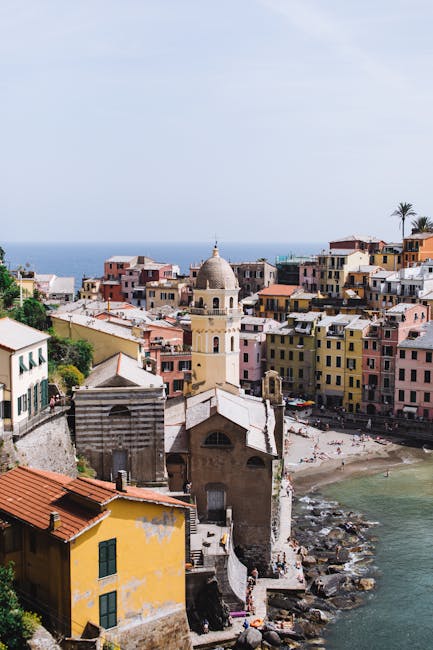
Vernazza is often named the essence of the Cinque Terre: a small amphitheater harbor, a rocky jetty lined with cafés and boats, and the distinctive silhouette of the Chiesa di Santa Margherita d’Antiochia overlooking the bay. The village centers on Piazza Marconi and the harbor — a perfect place to dive into local life.

The Chiesa di Santa Margherita d’Antiochia is at Piazza Santa Margherita, 1, 19018 Vernazza SP, Italy. Built between the 14th and 16th centuries, it’s recognizable by its octagonal bell tower and Ligurian-Gothic features. Opening hours: generally 09:00–19:00 in high season, and 09:00–17:00 off-season; entry is free, donations appreciated. Nearby, the Torre Belforte (Doria Castle Tower), a medieval tower within the fortifications, provides a natural viewpoint over the bay. Location: Via Doria, 19018 Vernazza SP, Italy. Access to the ramparts is free — beware of closures for safety in bad weather.
The Vernazza Train Station is at Piazza Fornaci, 1, 19018 Vernazza SP, Italy. From the station a staircase leads directly down to the harbor; it’s an excellent arrival point for hikers who want to end the day with dinner by the water. Restaurants to try: Ristorante Belforte (Piazza Marconi, 10 — seafood specialties, mains €15–€30) and La Torre (Via Roma, 67 — regional dishes, similar prices). Typical restaurant hours: 12:00–14:30 and 19:00–22:30; reservations highly recommended in July–August.

For hikers, Vernazza is a key point on the Sentiero Azzurro: the Vernazza–Corniglia section (about 3.5 km) offers outstanding views of the sea and terraced vineyards. The trail is moderately difficult; count on 1.5–2.5 hours depending on pace. Some portions may require the Cinque Terre Card (Trekking Card), typically purchasable for €7–€16 depending on duration (see pass info). If you prefer the sea, boat tours depart from the harbor: roughly €20–€35 for a one-hour panoramic ride depending on season.
Click here to book a panoramic cruise from Vernazza
Local tips for Vernazza
- Best photo times: sunrise or late afternoon for warm colors and fewer people on the jetty.
- Local snack: try Ligurian focaccia (focaccia al formaggio or plain focaccia) at bakeries near the station — around €2–€4 each.
- Safety: avoid the ramparts when wet after rain; the rocks can be slippery.
- Public toilets: available near the main square (small fee €0.50–€1 sometimes).
Corniglia: the perched terrace, steps and authentic calm
Corniglia is the highest village in the Cinque Terre and the only one without direct sea access; it sits on a ridge with sweeping coastal views. The climb to the heart of the village is either via the local train (stop Stazione Corniglia) followed by the iconic stairway called the Lardarina (382 steps), or by a winding road by car or shuttle from the station. Its elevated position makes Corniglia quieter: you’ll find fewer tourist shops and more of a village atmosphere.

The main religious building is the Chiesa di San Pietro, located at Piazza San Pietro, 2, 19016 Corniglia SP, Italy. The Genoese-origin church has a beautiful marble facade and Gothic elements. Hours: often 09:00–12:00 and 15:00–18:00; free entry. Nearby, the Belvedere di Santa Maria viewpoint offers a spectacular panorama over the sea and cliffs — a perfect spot for sunsets.
If you arrive by train, the Corniglia Train Station is at Stazione Corniglia, Via Molinara, 19016 Corniglia SP, Italy. The climb via the Lardarina is a must — take your time, stop to admire small craft shops and citrus terraces. Corniglia is also a starting point for less-traveled trails that lead through terraced vineyards and olive groves — ideal for peaceful, contemplative walks.

For food, Bar Terza Terra (Via Fieschi, 3, 19016 Corniglia) offers simple dishes, antipasti and local wines; price guide €6–€15. Hotels and agriturismi nearby often serve home-cooked dinners (menù dal contadino) for €20–€35 per person, wine included. Corniglia is also known for small producers of honey and olive oil: pick up a bottle of Ligurian extra virgin olive oil in the local shops (about €8–€15 depending on size).
Click here to learn to make pesto with sea view in Corniglia
Local tips for Corniglia
- Be physically prepared: the Lardarina climb is steep; bring water and wear grippy shoes.
- Panoramic break: pick a bench at the Belvedere during golden hours for an unbeatable sea-and-cliff view.
- Local purchases: favor small specialty shops for oils, olives and preserves; bargaining is rare, but ask about production methods.
- Quiet hours: afternoons are often the calmest time, perfect for photos without crowds.
Manarola: terraced vineyards, Punta Bonfiglio and iconic photos
Manarola is the most photographed village in the Cinque Terre: rows of colorful houses tumbling down to a small rocky harbor create the iconic image you see in every guidebook. It’s a focal point for sunset watching, admiring terraced vineyards and tasting the local wine, the famous Sciacchetrà.
The Chiesa di San Lorenzo is located at Via San Lorenzo, 5, 19017 Manarola (Riomaggiore) SP, Italy; a 14th-century Gothic building marked by its stone facade and the small square in front. Opening hours: generally 09:00–18:00; entry free. For the classic view, head to the Belvedere Punta Bonfiglio (reachable from Via Eugenia / Via Birolli): it’s the ideal vantage point for the famous shot of Manarola below. The best time is late afternoon into sunset.
The Manarola Train Station sits at Piazza Antonio Discovolo, 19017 Manarola SP, Italy. From the station a short paved path climbs into the village. In the harbor you’ll find fishing boats and restaurants like Trattoria dal Billy (Via Discovolo, 9), known for seafood and its terraces: mains €15–€28. If you prefer street food, try stuffed focaccias from the small shops around the station.

Wine lovers must try Sciacchetrà — the sweet passito wine typical of the Cinque Terre, made from partially dried grapes. Visit the Cooperativa Agricola Manarola or small local wineries for tastings; tasting prices about €8–€15 depending on how many wines are poured. For hikers, the Manarola–Riomaggiore stretch includes the famous Via dell’Amore (a short walk) — but this path is sometimes closed for repairs or stabilization work; check its status before you go.
Click here to taste Sciacchetrà and visit a vineyard in Manarola

Local tips for Manarola
- Iconic photo: to beat the crowds at the belvedere, arrive 45–60 minutes before sunset.
- Dinner reservations: terraces with views fill up quickly; book for peak times (8:00 PM in summer).
- Tastings: when sampling Sciacchetrà, ask the producer’s story — every cellar has its own drying method for the grapes.
- Nighttime cautions: some lanes are narrow and poorly lit after dark — carry a torch if you return late on foot.
Riomaggiore: southern gateway, the Castle, Sentiero Azzurro and fishing life
Riomaggiore, the last village when coming from La Spezia, embodies the maritime spirit of the Cinque Terre: small boats, fishing workshops, steep alleys and a bell tower outlined against the sea. It’s often the start or finish point for those exploring the coast by train or boat. Riomaggiore mixes urban intensity with direct access to the Sentiero Azzurro.
One important landmark is the Castello di Riomaggiore and the Chiesa di San Giovanni Battista (note: several churches share this name in the Cinque Terre). Riomaggiore’s Chiesa di San Giovanni Battista is at Via San Giovanni, 2, 19017 Riomaggiore SP, Italy; it has a 14th-century facade and a spare interior. The castle remains are around Piazza Cappellini (village center) and the ramparts: access is generally free except for sections closed for restoration. From the harbor, the walk up to the cemetery and viewpoint offers dramatic views of waves crashing on the rocks.
The Riomaggiore Train Station is at Piazza Riomaggiore, 19017 Riomaggiore SP, Italy. The Sentiero Azzurro begins here to reach Manarola via the Via dell’Amore (when it’s open). Boat connections to Porto Venere and La Spezia run seasonally; tickets €20–€35 for a one-hour panoramic excursion. For a typical meal try Ristorante La Lampara (Via Colombo, 21); mains €12–€25. Local bars often serve an aperitivo with focaccia, anchovies and local wines for €6–€12.

Riomaggiore is also a strategic spot to join a local fisherman for a morning at sea — an authentic way to learn traditional fishing techniques. Private excursions generally cost €60–€120 depending on duration and season; negotiating prices is possible in low season. Photographers will love the main street descending to the harbor (Via Colombo) framed by colorful facades — especially dramatic during the blue hour.
Click here to book a full-day boat trip with snorkeling from Riomaggiore
Local tips for Riomaggiore
- Sunrise: very photogenic from the harbor, perfect if you’re an early riser.
- Sea trips: favor a half-day in the morning for calmer waters and better chances of spotting marine life.
- Transport: the train station is the most convenient link to La Spezia or Monterosso; watch evening connections.
- Health: bring a small first-aid kit for blisters if you hike a lot — local pharmacies can be small and sometimes close in the afternoon.

Practical information: Cinque Terre Card, trails, transport and budget
To get around efficiently between the villages and access the trails, the Cinque Terre Card (sometimes called the Cinque Terre Trekking Card) is central. The card grants access to paid sections of the Sentiero Azzurro and often includes unlimited regional train travel between the villages (depending on the option). Indicative prices:
- Cinque Terre Card Trekking (1 day): around €7–€16 (varies by inclusions and season).
- Cinque Terre Card Treno (1 day with unlimited regional trains): about €16–€20.
Where to buy the card: at official tourist offices of the Parco Nazionale delle Cinque Terre (present in the villages, e.g. info points in Monterosso and Riomaggiore), at some stations (La Spezia, Monterosso) or via the park’s official app. Always check the current version online: www.parconazionale5terre.it (park official site). Trails are signposted, but their condition varies with weather and maintenance; some sections (e.g. Via dell’Amore) may be temporarily closed.
Transport: the most convenient way between villages is the regional train (Trenitalia). One-way inter-village tickets cost about €2.40–€4.00; a day pass (Cinque Terre Card Treno) is often better value if you take multiple trips in a day. Panoramic boats run in season (May–Sept): La Spezia–Cinque Terre or local half-day tours, prices €15–€40.
Indicative daily budget (per person): mid-range double room €80–€160; meals €30–€50; transport and activities €10–€30; tours and tastings €10–€30. In high season prices rise: book early (3–4 months ahead) for reasonable rates.
Other practical tips:
- Wifi and signal: mobile coverage is decent in the villages but can be limited on the trails. Download offline maps (Google Maps, Maps.me) if you plan to hike.
- Cash: some small shops don’t accept cards — keep €20–€50 in cash per village.
- Respect the park: don’t pick plants or litter — fines apply for violations of Parco Nazionale rules.
- Seasons: best times are May–June and September–October for pleasant temperatures and fewer crowds. July–August is very busy and more expensive.

How to prepare your stay: suggested itineraries and local experiences
Planning a trip to the Cinque Terre depends on what you want: intense hiking, beach time, a photography escape or a food-focused getaway. Here are suggested routes and local experiences based on the length of your stay.
Short stay (1–2 days): focus on two villages. Example: arrive in La Spezia, train to Monterosso in the morning, visit and beach time, evening in Monterosso; next day hike Monterosso–Vernazza (Sentiero Azzurro), lunch in Vernazza then train to Riomaggiore for sunset. Budget and logistics: 1-day Cinque Terre Card, regional train tickets.

Medium stay (3–5 days): explore all the villages on foot and by boat. Suggested base: Vernazza (central). Day 1 Monterosso and Fegina beach; Day 2 Vernazza and a village tour + Torre Belforte; Day 3 Corniglia and the Belvedere + olive oil tasting; Day 4 Manarola for sunset and Sciacchetrà tasting; Day 5 Riomaggiore and a sea trip. Allow one day for bad weather for museums and tastings.
Local experiences not to miss:
- Sciacchetrà tasting in a cellar in Manarola or Riomaggiore (€8–€15).
- Ligurian cooking class (pesto making): about €40–€70 per person, includes meal.
- Fishing boat trip: €60–€120 depending on duration, sometimes includes fishing and on-board preparation.
- Guided hike with a local Parco Nazionale guide: €30–€60 per person for a half-day.
Always bring appropriate shoes, a reusable water bottle (tap water is drinkable in the villages), and a small daypack for the trails. If you travel in summer, try a water activity (snorkeling, kayaking) to reach coves that are inaccessible by road.
Click here to learn to make pesto and taste wine
Click here to book a guided kayak tour Monterosso–Vernazza
Click here to book a day trip from Florence to Cinque Terre

Conclusion: experience the Cinque Terre like a local
The Cinque Terre are more than postcards: each village has its personality, history and little secrets. Monterosso represents seaside relaxation and developed tourist services; Vernazza charms with its harbor and medieval tower; Corniglia offers peace and high-altitude views; Manarola delivers iconic images and wine; Riomaggiore sets the maritime tone and opens the way to the sea. Knowing precise addresses (stations, churches, viewpoints), typical prices (regional trains, access cards, tastings) and usual opening times helps you optimize your stay and squeeze the most emotion out of every alley and panorama.
Traveling in the Cinque Terre also means respecting a fragile environment: the terraces, olive groves and vineyards are the result of intense human labor; take care of the trails, avoid disturbing local life and favor neighborhood shops to support small producers. Use the Cinque Terre Card when required to help maintain the trails, and check path conditions before setting out. Finally, time your days to enjoy the golden light of morning and evening — that’s when the villages reveal their most vibrant colors and atmospheres.
With this local guide you’ll be equipped to explore each village with sensitivity: from Corniglia’s hushed squares to Manarola’s blazing sunsets, from Riomaggiore’s fishermen songs to Monterosso’s lively energy. Pack comfortable shoes, a camera, a reusable bottle, an appetite for Ligurian cuisine and a curiosity to meet the locals. The Cinque Terre offer far more than views: they offer encounters, flavors and memorable walks — now go discover them, lane by lane.
