





Introduction — Manarola Uncovered: Best Photo Spots
Manarola, one of the most photogenic gems of the Cinque Terre in Liguria, looks like it was lifted straight out of a watercolor painting: stacked colorful houses, narrow alleys, terraced vineyards and the deep blue of the Mediterranean. Nestled between Corniglia and Riomaggiore, Manarola draws both amateur and pro photographers with its unique atmosphere, shifting light, and countless perspectives to capture at any hour. This article is a practical, comprehensive guide to Manarola’s best photo spots, complete with addresses, opening times, prices where relevant, immersive descriptions and local tips to get the most from your shots.
 Click here to discover Manarola vineyards with a wine tasting

Unlike a big city with dozens of regulated monuments, Manarola is photographed in layers: sweeping views from viewpoints, architectural details of the Chiesa di San Lorenzo, early-morning fishing scenes in the harbor, and texture studies in the alleys. The seasons dramatically change the look: spring for tender green vines, summer for blazing sunsets, autumn for warm golden light, and winter for softer light and quieter paths. Learning to read the light, waiting for the right wave on the pier, or getting up early for the fishing routine will turn a nice photo into a memorable image.
This guide is designed to be immediately usable: you’ll find the full names of must-see spots, precise addresses for navigation, accessibility times and any fees (though most viewpoints and alleys are free). Each spot is described in detail, with technical tips (best times, angles, recommended focal lengths) and practical advice (parking, walking access, alternatives when crowded). I’ve also included local recommendations — small cafés, hidden benches, photogenic staircases — to boost your visit and your images.
Whether you’re shooting on a smartphone, mirrorless or DSLR, Manarola offers a wide range of subjects: dramatic panoramas, intimate street portraits, architectural details and seascapes. Follow this guide to plan your photo route, make the most of your time, and come away with a series of images that tell Manarola’s living story — sea, stone and vineyards.
Belvedere Punta Bonfiglio and the North Cliff: Iconic Panorama
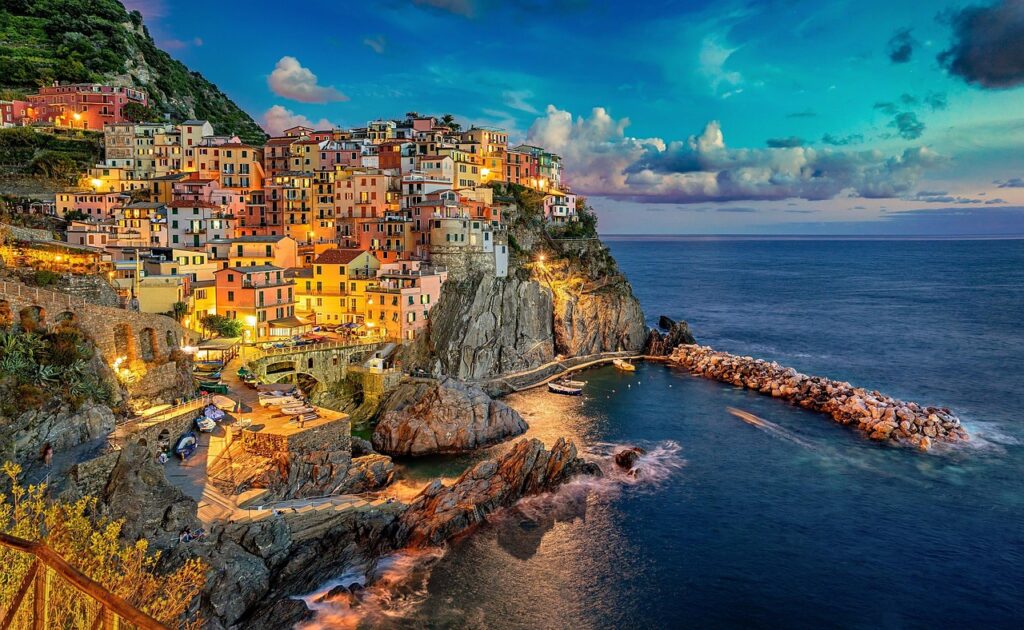
Belvedere Punta Bonfiglio is often mentioned as Manarola’s most iconic viewpoint. Located on the village’s northern side, this lookout offers sweeping views of the colorful houses clinging to the cliff and the open sea beyond. Exact address: Belvedere Punta Bonfiglio, Via Belvedere 5, 19017 Manarola SP, Italy. It’s a public space, free and accessible 24 hours a day. You can reach it on foot from the main square or via a pedestrian path starting on Via Renato Birolli, which includes some steep steps; the climb takes roughly twenty minutes from the train station.
Why is this spot a must-see? The natural layout of the promontory lets you compose in layers: foreground rooftops and alleys, midground verticality of the houses, and the sea and horizon in the background. Best times to shoot are early morning (6:00–8:30) for soft light and saturated colors, and at sunset (around 18:30–20:30 depending on the season) for warm tones and strong contrasts. Technical tip: use a mid-range focal length (35–50mm on full-frame) to include both village and sky, or a telephoto (70–200mm) to isolate architectural details and stacked layers of houses.
Local practical tips: there are no facilities at the belvedere (no toilets or cafés), so bring water and an extra camera battery. In high season (June–August), arrive well before sunset to beat the crowds — it’s common for several groups to take turns at the same spot. If you want a slightly different perspective, continue along the path that traces the cliff to the east: you’ll find small coves and ledges offering less conventional angles.
Click here to book your photo session with a local photographer
Manarola Harbor and Pier: Fishing Scenes, Waves and Dawn HDR
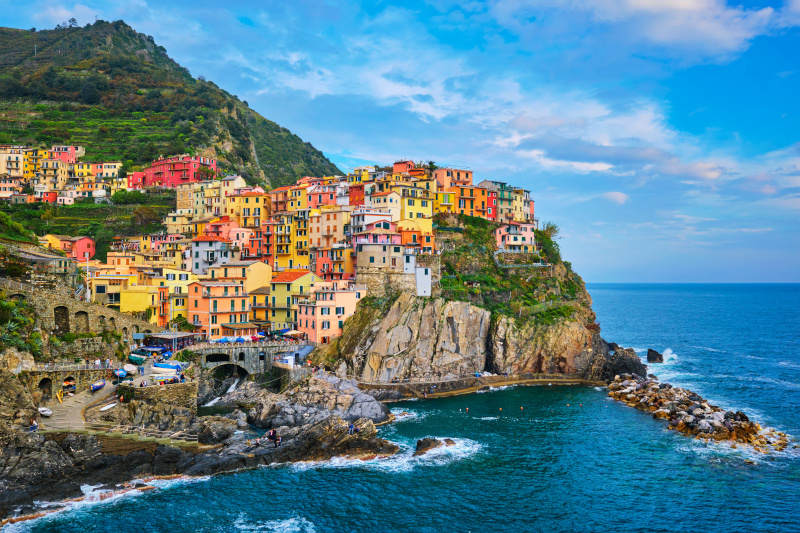
The small harbor of Manarola is one of those places where village life reads in close-up: colorful boats tied up, nets spread to dry, fishermen at work and the stone pier taking the brunt of Mediterranean waves. Address: Marina di Manarola, Via Renato Birolli, 19017 Manarola SP, Italy. Access to the harbor is free, but watch for signs marking private areas along some of the boathouses. The best time to photograph is at dawn (5:30–7:30): low-angle light and calmness yield intimate images, often with a light morning mist in winter.
To capture the marine energy, set your tripod near the pier but keep a safe distance from splashes. A long shutter speed (0.5–2 seconds) will smooth the water and contrast nicely with the rough textures of rocks and boats. For action scenes — fishermen hauling nets or waves hitting the pier — use a fast shutter (1/500s or faster) to freeze motion. If you like HDR, bracket three exposures at -2/0/+2 EV to balance bright skies and deep shadows in the village.
Practical tips: be careful on the pier — the rocks can be slippery. Seating isn’t guaranteed at the harbor, but several bars and restaurants overlook the sea: Trattoria dal Billy (Via Discovolo 51R, 19017 Manarola) is a local spot for an early coffee (approximate prices: espresso €1.20–2.50, simple breakfast €4–8; typical opening hours 08:00–23:00 depending on the season). To avoid tourist boats in high summer, aim for the first trains from La Spezia (schedules vary; regional trains often start around 6:00–6:30).
Click here to book a boat tour with snorkeling
Click here to book a sunset cruise with aperitif on board

Chiesa di San Lorenzo and Piazza San Lorenzo: Gothic Architecture and Sacred Details
The 14th-century Chiesa di San Lorenzo overlooks Piazza San Lorenzo and is a perfect subject for architectural shots and Gothic details. Address: Chiesa di San Lorenzo, Piazza San Lorenzo 1, 19017 Manarola SP, Italy. Although the church is a public building, opening hours can vary: generally it’s open to visitors and worshippers in the morning and late afternoon — typical times: 09:00–12:30 and 15:00–19:00 (check locally, especially in low season). Entrance is free, though it’s common to leave a small donation in the box near the choir.
Photographing the church lets you work with geometry and texture: stone façade, the rose window, interior vaults and lines that guide the eye to the altar. For exteriors, a wide-angle lens (16–24mm) will include the square and neighboring houses, while a 50–85mm lens is ideal for isolating the rose window and sculptures. Inside, be mindful of photo restrictions (no flash at times, or photography prohibited during services) — respect worshippers and ceremonies. Use moderate ISO and a discreet tripod if local rules allow.
Practical tips: Piazza San Lorenzo is a great spot for street portraits and daily-life scenes: children playing, elders chatting on benches, laundry drying in the alleys. The square is often quieter in the morning and enjoys pleasing side light then. For unique details, look for the small commemorative plaque on the church’s north side or the carved wooden doors on the forecourt. For a coffee break afterward, Bar Centrale (Via San Lorenzo, 19017 Manarola) serves drinks and snacks — indicative prices espresso €1–2, panini €4–7; common hours 07:30–20:00.
Click here to taste wines and tour Manarola on foot
Inner Streets and Staircases: Portraits, Textures and Everyday Life
The real photographic treasures of Manarola are often off the panoramic routes — in the tangled alleys, narrow staircases, flowered balconies and fishing workshops. Useful street names for exploration: Via del Molo (near the harbor), Via Discovolo (the main alley with restaurants), Via Renato Birolli (convenient access between the station and village), and the already-mentioned Piazza San Lorenzo for its central layout. All these alleys are public and free to explore, but respect residents’ privacy and avoid taking portraits of people without consent.
Shooting these spaces requires patience and sensitivity: wait for passersby to clear for a clean composition, or include locals for authentic documentary portraits. The stairs, often uneven and worn, provide strong leading lines — a 35mm or 50mm focal length works well here. Patinated walls, laundry on lines and pots of basil or geraniums create colorful points of interest. Hunt for details: a rusty door handle, a restaurant sign, an old bicycle leaning against the stone.
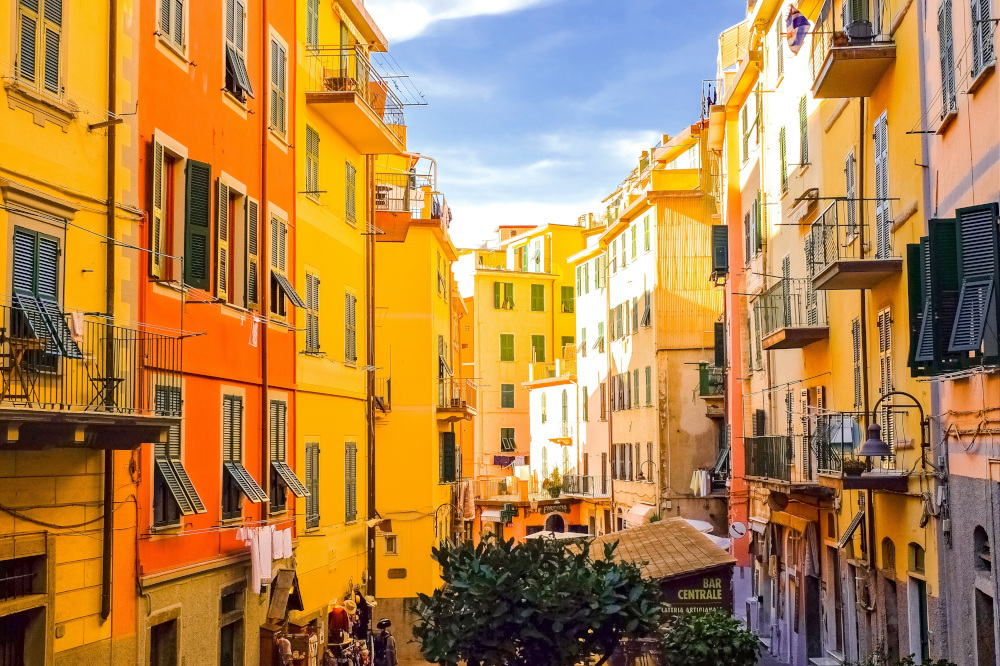
Local practical tips: some alleys are very narrow and can get crowded in high season — plan sessions for early morning or late evening. Respect « privata » signs and don’t enter private courtyards without permission. If you want to photograph interiors or ask to enter an artisan’s workshop, approach politely and, when possible, buy a small souvenir or a coffee as a thank-you. Lastly, wear good shoes: cobbles and steps can be uneven and slippery, especially after rain.
Click here to explore the Cinque Terre villages on foot
Conclusion — Planning Your Photo Series and Final Tips
Manarola offers an endless palette of subjects for photographers: grand panoramas from viewpoints, vibrant marine scenes at the harbor, sacred architectural details at the Chiesa di San Lorenzo, and everyday moments captured in the alleys. To create a coherent series, start by choosing a theme: color (façade saturation), light (sunrise or sunset), or local life (fishing, vineyards, artisans). A simple two-day plan covers the essentials: a dawn session at the harbor, a morning exploring the alleys and church, and a sunset at Belvedere Punta Bonfiglio.
On the practical side, consider logistics: Manarola station (on the La Spezia–Genoa line) makes coming and going easy without a car; parking is limited and expensive — leaving your car in La Spezia or Levanto and taking the train is often quicker and less stressful. Pack extra batteries, spare memory cards, and a lightweight travel tripod. Respect local people: ask permission for portraits and be discreet during religious ceremonies or private events. In high season, schedule shoots outside peak tourist hours for more authentic images.
Finally, don’t be afraid to explore beyond the classic spots: walk around the pier, climb a few extra steps, talk to locals for recommendations — often the best photos come from a spontaneous moment. By following these tips and using the addresses and practical information in this guide, you’ll leave with a collection of images that capture not only Manarola’s beauty but its soul — the Mediterranean in the background, stone and wine in the foreground, and living moments frozen to last.