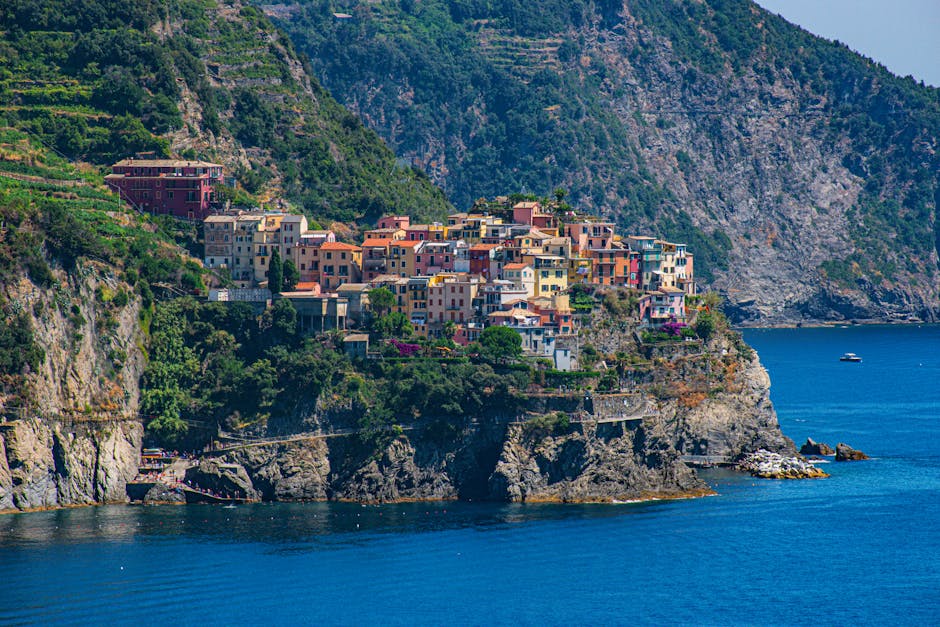






Introduction — Corniglia, the hilltop village of the Cinque Terre
Corniglia is the third of the five Cinque Terre villages if you travel the coast from La Spezia toward Levanto, but it immediately feels different: perched on a volcanic rock ridge roughly 100 meters above the sea, it doesn’t sit down at the water’s edge and has no harbor like Vernazza or Monterosso. That position gives it a distinct hill-village atmosphere, where farming, terraced vineyards and stone shape the space and daily rhythm. Narrow alleys, ochre-toned houses and the long staircase known as the “Lardarina” tell a story of centuries-old interactions between people and the maritime landscape.
Visiting Corniglia means adopting a different pace: you’ll climb steps (or avoid them by taking the bus), take time to listen to the wind moving through the vines, and linger at viewpoints that open onto vast panoramas of the Ligurian coast. Unlike the bustling port villages with their constant maritime activity, Corniglia offers a kind of meditative retreat — quiet cafés, Romanesque‑Gothic church façades, and little neighborhood shops where you can buy bread, pesto and regional wine.
This in-depth guide will lead you along the trails that connect Corniglia to the other Cinque Terre villages, point out the sights to see in the hamlet itself, detail the vineyards and typical wines such as Sciacchetrà, and give practical tips to make the most of the place’s calm and beauty. You’ll also find exact addresses, suggested opening times, entrance or tasting prices when relevant, and local advice — everything to help you turn a simple stop into a memorable, authentic experience.
Corniglia is ideal for hikers looking for a less crowded starting point, for wine lovers curious about terraced terroirs, and for anyone who wants to taste absolute quiet while staying within reach of the Cinque Terre’s main attractions. Away from the noise of the quays, Corniglia offers views that invite contemplation: cliffs, vineyards and, in the distance, the sea changing color as the hours pass. In this article each aspect is covered precisely: from getting there from the station to coastal trails, and must‑see spots like the church of San Pietro, the Belvedere Terrace and the small family wineries.

Getting to Corniglia and first landmarks: station, the Lardarina and viewpoints
Getting to Corniglia is part of the experience. Most visitors arrive by train on the regional Cinque Terre line (Trenitalia) that connects La Spezia Centrale and Levanto. The official stop is Corniglia station (Stazione di Corniglia), located below the village. Approximate address: Stazione Corniglia, Via Stazione, 19016 Corniglia (SP), Provincia di La Spezia, Italy. Note: the station is not in the village center — you’ll have to climb up.
The iconic ascent is via the Scalinata Lardarina, the long stairway of 382 steps that links the station to the heart of the village. The name “Lardarina” evokes the switchback climb that leads to the historic center. An alternative for those who struggle with the climb is the municipal shuttle (local bus) that runs from the station up to the top: the local bus usually departs at the station exit and drops off at the village’s main junction. Indicative bus fare: roughly €1.50 per trip (local average); schedules and fares can vary by season — check at the station.
Once at the top, one of the first places to look for is the Belvedere di Santa Maria and the Terrazza del Moresco, two viewpoints where volcanic rock, narrow rows of houses and the sea combine to offer vivid, deep panoramas. The main belvedere is on Via Fieschi / Piazza San Pietro (GPS: Piazza San Pietro, 19018 Corniglia, La Spezia). Here you can sit on a low wall, watch boats in the distance, and smell the salty breeze.
Practical tips:
- Wear comfortable shoes if you plan to climb the Scalinata Lardarina (especially in summer).
- Bring water — the steps can be exhausting under the sun.
- If the climb puts you off, ask about the local shuttle to avoid the effort (schedules change in high season).
- The station may not have constant staff presence; keep your belongings close and buy tickets before boarding (Trenitalia machines or mobile app).
 Click here to Explore all five villages by train with guide

Must-see spots in Corniglia: church, squares and winding lanes
Corniglia doesn’t boast grand monuments, but every stone, church and tiny square tells a story. The best-known religious site is the Chiesa di San Pietro (Church of Saint Peter). Address: Piazza San Pietro, 19018 Corniglia, Provincia di La Spezia, Italy. Built on a Romanesque‑Gothic plan in the 14th century and altered several times, the travertine façade and the modest but harmonious interior create an atmosphere of quiet reflection. Indicative opening hours: 09:00 – 19:00 (depending on season and services). Entrance: free (donations welcome).
Right next to it, the Piazza San Pietro often serves as the village’s social heart: a few benches, a bar and the gateway to many alleys. Main streets like Via Fieschi and Via Ottone are lined with shops, small restaurants and viewpoints. While wandering, look out for the old Loggia dell’Orologio and the small stone fountains, reminders of a settlement built around water and stone.
A short walk away, the Belvedere di Corniglia (Punta Mesco view) offers a different angle on the sea and cliffs. For quieter panoramas, walk back up Via alla Spiaggia (symbolically leading to the sea) and search for the small steps that descend to private rocky balconies — perfect spots for a late picnic.
Prices and recommendations:
- Church of San Pietro: free entry — respect service times (usually morning and late afternoon).
- Museums: Corniglia doesn’t have a large dedicated museum, but interpretation panels are spread around the village and are free to read.
- Photography: avoid photographing weddings or religious ceremonies inside the church.
Trails around Corniglia: the path to Vernazza and vineyard routes
Corniglia is an excellent launching point for exploring the Cinque Terre trails. Two main routes leave from or pass near the village: the classic blue trail (Sentiero Azzurro) and the inland tracks through hills and vineyards. The Sentiero Azzurro (Trail 2) links Corniglia to Vernazza to the east and to Manarola / Riomaggiore to the west via different sections. The stretch to Vernazza is known for its sea views and climbs along marked stairways. Indicative duration: 1h15 to 1h45 depending on pace and photo stops. Access: start from the top of the village following signs for « sentiero per Vernazza ».
Another fascinating option is the network of vineyard paths winding through the terraced slopes above and around Corniglia. These tracks (sometimes called sentieri bianchi) pass dry‑stone walls, shepherds’ huts and pergola‑trained vines. They offer full immersion in the agricultural landscape of the Cinque Terre: walking them reveals the human effort behind each terrace and the logic of growing grapes on steep slopes.
Practical hiking tips:
- Gear: sturdy walking shoes, a hat, water (at least 1.5 L per person in summer), sunscreen.
- Cinque Terre Card (national park): to access some maintained sections and services, the Cinque Terre Card is often required. Indicative price: €7.50 to €16 depending on the version (day, trail access and train options — check the official site). It also grants access to information and restroom services.
- Timing: start early to avoid heat and the crowds that usually arrive after 10:30 in high season.
- Difficulty: some sections are technical (steps and steep slopes) — check conditions with the Corniglia information center or at the station.
Click here to book a Corniglia–Manarola hike with tasting
Wines and local food: vineyards, tastings and specialties
The Cinque Terre have an iconic wine: Sciacchetrà, a sweet, aromatic late‑harvest (passito) wine produced on the steep terraces over the sea. In Corniglia, several small family producers grow local grape varieties (Bosco, Albarola, Vermentino) and make dry wines as well as limited quantities of Sciacchetrà. Direct contact with winemakers is common: farm tastings, small shop sales and sometimes vineyard visits can be arranged by appointment.
Wine addresses and tasting experiences (typical examples):
- Azienda Agricola Corniglia Vigneti (example local winery) — Address: Via Vigneti, 3, 19018 Corniglia. Tastings by appointment. Tasting price: €10 to €20 per person for 3–5 wines; Sciacchetrà from €25 per bottle.
- Enoteca Locale (wine bar) — Address: Piazza San Pietro, 19018 Corniglia. Hours: 10:00 – 22:00. Glass of local wine: €4 to €8.
Local dishes not to miss:
- Pesto alla genovese: local basil, pine nuts, olive oil — often served with trenette or trofie.
- Acciughe sotto sale (salted anchovies from Monterosso or local) — prepared in oil or as a sauce.
- Focaccia Ligure: thin, crisp and lightly salted — essential for a picnic at a belvedere.
- Food tours: several small restaurants and bars offer platters of local products (cheeses, cured meats, sun‑dried tomatoes, olives).
Tasting tips:
- Call ahead: many small wineries open by appointment — especially out of season.
- Quantities are often limited: Sciacchetrà is rare and can be expensive (often > €30 per bottle in some years).
- Respect restaurant meal times (lunch 12:00–14:30; dinner 19:00–22:30) and consider booking in high season.
Click here to learn pesto in Corniglia and enjoy a tasting
Click here to Book a cellar tasting and vineyard visit

Local practical tips: where to sleep, eat and how to behave
Staying in Corniglia calls for simplicity and authenticity. Accommodation options range from family-run B&Bs to small self-catering apartments. A few typical addresses (representative examples):
- Casa Vacanze Corniglia — Via Fieschi, 12, 19018 Corniglia. Double room: from €70 in low season up to €150 in high season. Check‑in: usually from 15:00; check‑out: before 10:00.
- B&B Il Nido di Corniglia — Via alla Chiesa, 7, 19018 Corniglia. Breakfast included; limited Wi‑Fi. Rates vary by season.
Recommended restaurants and cafés:
- Bar Centrale Corniglia — Piazza San Pietro, 19018 Corniglia. Hours: 07:30 – 22:30. Coffee, sandwiches, local aperitifs (prices: coffee €1; glass of wine €4–6).
- Trattoria Da Lucia (example) — Via Fieschi, 5, 19018 Corniglia. Hours: 12:00 – 15:00 / 18:30 – 22:00. Main courses: €12–20.
Behavior and local respect:
- Respect the village’s quiet: Corniglia is a residential place and locals value calm, especially in the evening.
- Do not break dry‑stone walls or leave litter on the trails: local discipline keeps the terraces alive.
- Avoid swimming directly below unmanaged cliffs: favor official beaches or authorized access points in neighboring villages.

Suggested itineraries for a day or a weekend
A day in Corniglia (suggested itinerary):
- Morning: arrive at Corniglia station, climb the Scalinata Lardarina or take the station bus. Breakfast at Bar Centrale (coffee and focaccia).
- Mid‑morning: visit the Chiesa di San Pietro (Piazza San Pietro) and wander Via Fieschi and the nearby lanes.
- Lunch: a light midday meal (local products platter) or a sandwich to go; a wine tasting at a local enoteca (book if possible).
- Afternoon: hike to Vernazza (Sentiero Azzurro) or stroll through the terraced vineyards. Return to a belvedere for sunset.
- Evening: dinner at a local trattoria and stay overnight in a B&B to enjoy the calm.
A long weekend:
- Day 1: settle in, explore the village and do a short walk around the terraces.
- Day 2: a full day of hiking (Corniglia → Vernazza → Monterosso) or a boat trip from Monterosso to see the Cinque Terre from the sea.
- Day 3: morning tasting at a producer, buy a few bottles of Sciacchetrà, then depart by train.
Click here to Book a guided kayak tour to Vernazza
Click here to book a boat tour from Monterosso
Final practical information:
- Public toilets: a few facilities at the top of the village (often paid €0.50–€1), check posted signs.
- Money: many establishments accept cards, but small shops sometimes prefer cash. Bring small bills for minor purchases.
- Language: Italian is the local language — English is widely understood in tourist businesses, but a word in Italian (thank you, hello) is appreciated.
Conclusion — Why Corniglia deserves a slow visit
Corniglia is the essence of a slow, thoughtful trip through the Cinque Terre. The appeal here isn’t a long list of spectacular attractions but the sum of its details: the worn steps of the Scalinata Lardarina, the modest elegance of the Chiesa di San Pietro on Piazza San Pietro, the scent of basil and olive oil in the lanes, and, above all, the chance to sit on a belvedere and watch the sea shift color. For travelers escaping the hustle of the ports, Corniglia offers the quiet of a hilltop village where life still follows the rhythm of the seasons and the vines.
Hikers find a strategic starting point for exploring coastal links and lesser‑visited vineyard trails; wine lovers can meet family producers and taste rare bottles like Sciacchetrà; couples and seekers of calm will enjoy the authentic ambiance, far from tour boats and endless crowds. The practical information provided here — addresses like Piazza San Pietro for the church, Corniglia station below, and pointers for enotecas and B&Bs — is meant to make planning your visit as smooth as possible.
One last tip: take your time. The Cinque Terre reward attention. In Corniglia, the trip is more than a series of photo opportunities — it’s a collection of small moments: a glass sipped on a sunny wall, the shade of an alley in mid‑afternoon, a conversation with a winemaker about a particular vintage. Respect the locals, the cultivated terraces and the trails, and you’ll leave with more than images: a deep memory of a place where people and nature have adjusted over centuries to create a landscape both harsh and delicate.
Happy travels to Corniglia: let the steps guide you, let the terraces speak, and let the wine finish the day.