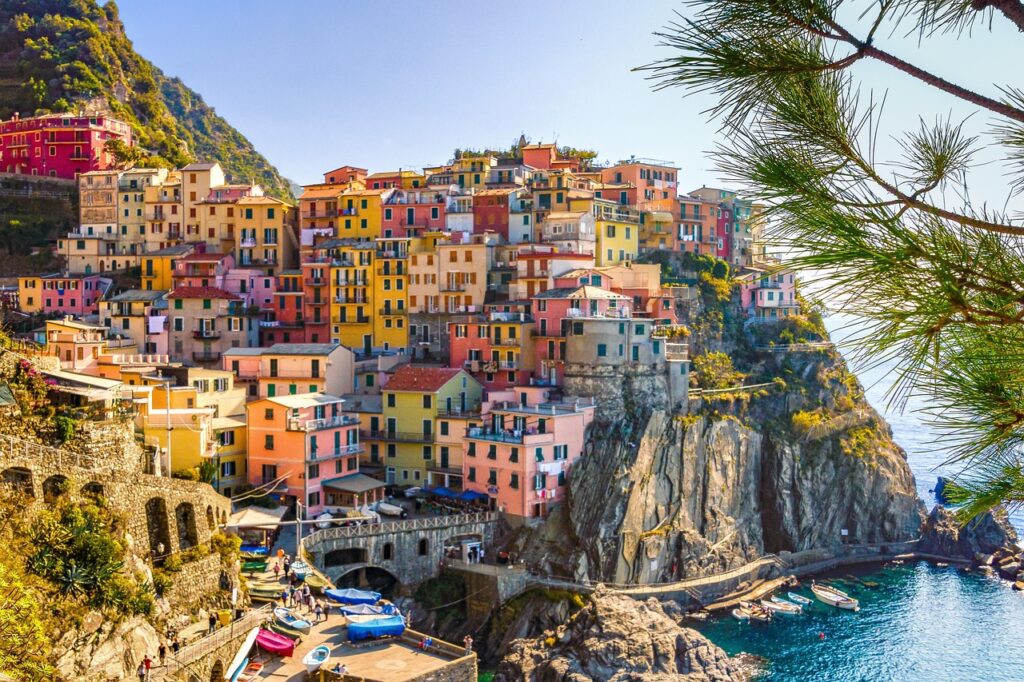





Introduction: Plunging into the Soul of the Cinque Terre
The Cinque Terre, a UNESCO World Heritage site, is a rugged, colorful stretch of Ligurian coastline where five cliffside villages — Monterosso al Mare, Vernazza, Corniglia, Manarola and Riomaggiore — cling to steep slopes, linked by trails, rail and sea. Famous for their pastel façades, terraced vineyards and tiny coves, these hamlets are first and foremost living places: fishermen still haul in nets, winemakers tend the local sciacchetrà grape, and families run trattorie handed down through generations.
This comprehensive guide aims to walk you through each village: what not to miss, how to get there, typical costs for key activities, and practical tips for an authentic experience. Instead of just serving postcard views, I offer concrete itineraries, exact addresses (restaurants, churches, viewpoints), opening hours and prices in euros so you can plan your trip without surprises. You’ll also find immersive details: the taste of a still-warm focaccia on Monterosso’s harbor, the gentle lap of the sea in Vernazza at dawn, Manarola’s cozy narrow alleys, Corniglia’s suspended quiet above the cliffs and the baroque façade of San Giovanni Battista church in Riomaggiore.
The Cinque Terre are meant to be savored slowly. Their hiking trails offer some of Italy’s most spectacular coastal panoramas, but be mindful of peak crowds and weather conditions: in rainy alerts, some sections may be closed. For logistics there are several options: local trains (the most convenient), water taxis, local shuttles and walking trails. The Cinque Terre Card (hiking or app+train versions) often represents the best value for hikers and visitors planning to use the official trails.
Before diving into the village-by-village details, one major tip: favor off-peak hours (sunrise or late afternoon) to avoid crowds and enjoy incredible light on the façades. The sea, terraced vineyards and local cuisine are worth experiencing with patience. In the sections below you’ll find for each village: exact addresses, must-see monuments with opening hours, any entrance fees, sensory descriptions and local tips (where to eat, where to swim, best viewpoints).

Monterosso al Mare — Harbor, Beaches and Old Town
Monterosso al Mare is the largest of the five villages and the only one with a significant sandy beach, which is why it’s often the base for a seaside stay in the Cinque Terre. Monterosso is split into two parts: Monterosso Marina (the modern seafront and main beach) and Monterosso Alto (the perched medieval old town). The station is called « Stazione di Monterosso » and is located at Piazza della Stazione, 19016 Monterosso al Mare.
Don’t miss:
- Spiaggia di Monterosso (Fegina) — the main beach (Lungomare Fegina). Free access, but sunbeds and umbrellas usually cost between €10 and €25 per person for the day depending on the season. Great for a family day out.
- Statua del Gigante — the seaside statue near Fegina beach (Lungomare Fegina). Visible from the promenade, free access.
- Chiesa di San Giovanni Battista — the Gothic church in the old town (Via Roma). Hours: generally open 09:00–12:30 and 15:00–19:00; check locally. Free entry, donations welcome.
- Villa Montale (Villa degli Albertini) — a viewpoint and private garden visible from the heights of the Fegina promenade.

Addresses and practical info:
- Station: Stazione di Monterosso, Piazza della Stazione, 19016 Monterosso al Mare. Trenitalia regional tickets: a trip from Genoa to Monterosso can cost between €4 – €10 depending on distance and train type.
- Tourist Office (Ufficio Informazioni Turistiche): located near the station; check opening hours on site. Often open 09:00–18:00 in high season.
- Recommended restaurant: Ristorante Belvedere, Via Fegina 10, 19016 Monterosso al Mare — fresh fish dishes, fish menus around ~ €25–€40 per person.
Practical tips: the old town is steep and paved — wear comfortable shoes. Fegina beach is lifeguarded in summer. If you prefer a smaller cove, walk west toward Punta Mesco (scenic trail). Watch out on windy days: the sea can be rough and some boat services limited. Also try the local focaccia and a glass of Sciacchetrà for dessert, a regional sweet specialty.
 Click here to book a boat trip from Monterosso
Click here to paddle from Monterosso to Vernazza with a guide
Vernazza — The Photogenic Jewel with an Amphitheater Harbor
Vernazza is often regarded as the most photogenic of the Cinque Terre: its terraced houses tumble down to a small amphitheater-shaped harbor protected by the headland of Castello Doria. The station is Stazione di Vernazza, Piazza Marconi, 19018 Vernazza. Vernazza keeps an authentic maritime feel with its colorful boats and lively lanes.
Must-sees:
- Chiesa di Santa Margherita d’Antiochia — address: Piazza Santa Margherita, 1, 19018 Vernazza. 14th-century church, usually open 09:00–18:00. Free entry; access can be limited during religious events.
- Castello Doria — medieval tower and protective ridge (access from Via Roma). Hours: generally 09:30–19:00 in high season. Small admission fee €2–€4 depending on the season. Exceptional panoramic views over the gulf.
- Porto di Vernazza — free access, perfect for sunset photos and for lunch at a waterside trattoria.
Practical addresses:
- Station: Stazione di Vernazza, Piazza Marconi, 19018 Vernazza.
- Signature restaurant: Ristorante Belforte, Via Mezzanella 1, 19018 Vernazza — perched on the cliff with sea views. Fish menus ~ €30–€50 per person depending on dishes and wine.
- Bar / Gelateria: Gelateria Vernazza, Via Roma 4 — artisanal ice cream, prices between €2–€4 depending on portion.
Click here to join a boat trip with snorkeling

Local tips: Vernazza gets very busy in high season; arrive before 10:30 to enjoy the harbor nearly empty and the ideal light for photos. The small rocky coves around the harbor are perfect for a dip — beware of rocky bottoms, bring water shoes. For a memorable panorama, climb the few hundred steps up to Castello Doria; the ascent is steep but short. If short on time, prioritize the balcony in front of Santa Margherita church for a perfect harbor view.

Corniglia — The Quiet Cliffside Village
Corniglia is the most unusual of the Cinque Terre: perched on a cliff about 100 meters above the sea, it’s the only village without direct beach access — which gives it a calmer, less touristed vibe. The railway station sits below; to reach Corniglia you must climb the « Lardarina » stairway of 382 steps or take the local shuttle when available. Station: Stazione di Corniglia, Piazza Stazione, 19016 Corniglia.
Points of interest:
- Chiesa di San Pietro — located on Via Fieschi, a Gothic-origin church known for its portal and simple interior. Hours: often open 09:00–18:00; free access.
- Santa Maria viewpoint — panoramic views over the coast and vineyard terraces, ideal at sunset. Free access.
- Path to Guvano Beach — an old naturist beach and cove (access via mossy trails; exercise caution). Free access; not recommended without local safety info and conditions.
Addresses and services:
- Station: Stazione di Corniglia, Piazza Stazione, 19016 Corniglia. From the station allow 10–20 minutes to reach the top of the village (stairs or paid shuttle, shuttle ~ €1–€2 per trip).
- Recommended café: Bar Comunale, Via Fieschi 8 — espresso and small pastries, prices €1–€3.
- Local product: Corniglia wines (small producers) — cellar tastings, prices for a tasting between €8–€15 depending on the winery.
Practical tips: Corniglia requires walking and climbing; it suits those seeking peace and great vineyard hikes. The lanes are narrow and shade is limited: bring water and a hat in summer. The viewpoints from the main piazza are among the best to see the whole Cinque Terre without the crowds. If you like hiking, combine Corniglia with the Montenero trail to descend toward Manarola via less-trafficked panoramas.
Click here to learn how to make pesto in Corniglia
Manarola — Vineyards, Rocky Harbor and Sciacchetrà Tastings
Manarola is often associated with an iconic image: houses cascading down the cliff, narrow alleys and a rocky harbor where visitors gather to watch the sunset. The station is on Piazza Stazione, 19017 Manarola. Manarola is an ideal starting point for hikes to Corniglia and Riomaggiore and for tasting local wines.

To see:
- Via dell’Amore (Path of Love) — the coastal path between Manarola and Riomaggiore (status can change: sometimes partially closed for repairs or safety). If open, this short flat trail is perfect for romantic strolls; access is included with the Cinque Terre Card hiking pass. Outside of the pass, access fees vary, often €7–€10.
- Chiesa di San Lorenzo — Via San Lorenzo, 1, 19017 Manarola. Baroque church and viewpoint. Hours: generally 09:00–18:00; free entry.
- Terraced vineyards — several wine trails and tasting spots (small wineries). Tastings: between €10–€25 depending on the cellar and number of wines.
Addresses and good eats:
- Station: Stazione di Manarola, Piazza Stazione, 19017 Manarola.
- Bar / Trattoria: Ristorante Nessun Dorma, Via Renato Birolli 122, 19017 Manarola — famous for bruschette and views, shareable portions, prices €8–€20 per dish.
- Cellar: Azienda Agricola Buranco or local producers — small Sciacchetrà tastings available by reservation.

Local tips: Manarola is small and very busy in high season: visit early morning or late afternoon to photograph the harbor with fewer people. For a special moment, sit on the harbor rocks (zona rocciosa) with a bottle of Vermentino or Sciacchetrà — respect the environment and don’t leave litter. If you love walking, trails toward Corniglia (higher paths) offer remarkable vineyard views; wear sturdy shoes, as rock can be slippery after rain.
Click here to book a wine experience and vineyard tour
Riomaggiore — The Eastern Gateway and Sea Lookout
Riomaggiore is the eastern gateway of the Cinque Terre, the first village you reach coming from La Spezia. Its character is carved by narrow lanes that step down toward a small harbor and a rocky quay where boats depart for the other villages. The official station sits at Piazza Guglielmo Marconi, 19017 Riomaggiore.
Main points of interest:
- Castello di Riomaggiore — medieval remains up high, a natural viewpoint. The surroundings are freely accessible; some areas may be open depending on hours and local events (check with the tourist office).
- Chiesa di San Giovanni Battista (Riomaggiore) — located on Via Colombo, in the Ligurian Gothic style. Hours often 09:00–18:00; free entry.
- Marina di Riomaggiore — quay and rocky bays good for diving and snorkeling; free access, exercise caution for sea entry (rocks and currents).
Addresses and services:
- Station: Stazione di Riomaggiore, Piazza Guglielmo Marconi, 19017 Riomaggiore.
- Traditional restaurant: Trattoria La Lanterna, Via Fieui di Caruggio 2 — local fish cuisine, average price €20–€35 per person.
- Boat excursions: Several operators depart from the harbor; price for a one-hour trip to Vernazza/Monterosso ~ €10–€20 depending on season.
Practical tips: Riomaggiore is the most convenient starting point if you’re coming from La Spezia (central station). For photographers, the climb toward Via dell’Amore (if accessible) and the village steps offer dramatic compositions at golden hour. Adventurous visitors will enjoy diving spots around the harbor — check local sea conditions. Also, if you’re leaving early for La Spezia or Pisa, verify regional train schedules: frequencies may be reduced in low season.
Click here to book a full-day snorkeling cruise
Click here to rent a double kayak for one hour

General Practical Tips, Getting Around and the Cinque Terre Card
Getting between villages is straightforward but requires some planning, especially in high season. Here’s a compact guide to best practices, indicative costs and tips to make the most of the Cinque Terre.
Transport:
- Train (Trenitalia, Regionali) — the fastest and most practical way. Stations are very close to town centers. Indicative prices: a short regional hop between villages usually costs between €1.80 and €4.00. Check schedules on the Trenitalia site or via the local app.
- Cinque Terre Card — combined access to trails + services: several options exist. Indicative example: Cinque Terre Card Trekking 1 day around €16, 2 days around €31; the « Treno » version (unlimited train travel between villages for the day) can cost between €20–€25 per day depending on the year. Prices vary; buy at tourist offices or online.
- Boat — seasonal (mainly April–October), operators run links between Monterosso, Vernazza, Manarola and Riomaggiore. One-way fares ~ €8–€15, longer return excursions ~ €25–€35.
Click here to book a guided cruise from Levanto or Monterosso

Safety and weather:
- Check trail conditions before you set out: sections can be closed for maintenance or after bad weather. Tourist offices and signs at trailheads show the current status.
- In heavy rain or rockfall risk, local authorities may close sections: follow instructions and never ignore barriers.
Approximate budget for a typical day:
- Local train between two villages: €2–€4 per trip.
- Cinque Terre Card hiking 1 day: ~ €16 (trail access + services). Check for updated prices.
- Meal at a mid-range trattoria: €15–€35 per person (excluding wine).
- Beach/sea amenities: sunbed/umbrella rental €10–€25 per day depending on the spot.
Responsibility, Sustainability and Tips to Respect the Area
The Cinque Terre is a fragile landscape: terraced soils, ancient vineyards, sensitive marine life and overloaded summer infrastructure. Responsible travel means following a few simple but essential rules to help preserve this place:
- Don’t leave litter: carry a bag for your trash if needed and use local collection points.
- Don’t pick plants and stay on marked trails — erosion is a constant challenge.
- Support local businesses: buying a focaccia from the village bakery or a bottle of wine from a local producer helps the community stay vibrant.
- If you use the trails, be considerate to other hikers and yield to those going uphill on narrow paths.
Conclusion: How to Make the Most of the Cinque Terre
The Cinque Terre are a concentrated slice of Mediterranean Italy: vertiginous landscapes, colorful houses, fishermen and terraced vines. Each village has its own vibe — from beachy Monterosso to peaceful Corniglia, photogenic Vernazza, romantic Manarola and watchful, maritime Riomaggiore. This village-by-village guide gives you the tools to organize your visit: addresses, hours, indicative prices and practical tips for hiking, swimming, eating and photographing.
To optimize your stay, plan around your priorities: hiking (opt for the Cinque Terre Card Trekking), enjoying the sea (Monterosso), tasting local wines and specialties (Manarola and Corniglia), or chasing the perfect light for photos (Vernazza and Riomaggiore at sunset). Travel light, bring good shoes, drink plenty of water and be ready for some climbs — but the views are worth every step.
Finally, remember that practical info (church hours, small museum openings, exact card fares and boat schedules) changes with season and local decisions. Before you go, check updates on the official Cinque Terre municipal sites or with tourist offices (usually located at each station or main square). By respecting the places and their people, you’ll help preserve this unique heritage and take home the best memories of your visit.
